

Sami Yusuf : le Magnifique
09/10/2007 08:19 par likoli-nass



09/10/2007 08:19 par likoli-nass
07/10/2007 12:12 par likoli-nass
Clean up the time:
a) Telephone: Try to minimize your chat on the telephone. If you are used to chat with your friends on a regular basis, try to make it short. Share with her the importance of this month & tell her that you want to devote yourself for Ibaadah in order to get the maximum reward in this month. Try to share with her these tips.
b) Cooking: Try to cook something simple during Ramadan as this is a month of Ibaadah & Quraan, not a month of food. There are some husbands who push their wifes to cook different varieties of food & sisters have to spend their time in the kitchen. If its very necessary, keep a tape of Quraan in the kitchen & listen to it while you are busy in Kitchen, or keep your toungue moist with the Zikr. [Try to find out some short cut & tips to prepare the food quickly]
C) Shopping: Try to do the Eid shopping NOW. The last ten days of Ramadan when we have to be doing more Ibaadah & spend our time in doing good deeds, most of the muslims are busy in doing shopping for Eid & their kids. Sisters! These ten days, we has to exaggerate ourself in doing more ibaadah & to catch Laila-ul qadr. Try to make this Ramadan a very different from all the previous ramadaans.
D) Dinner Party/Iftaar: Iftaar parties during ramadan are getting very common now. This is the Month for you sisters. we have the rest of the full year to do parties & to get socialize. Indeed its a great reward to break someone's fast but try to give food to people who are needy & poor. The prophet Sallalahu alaihi wasallam said, Whoever gives food to a fasting person with which to break his fast, will have a reward equal to his, without it detracting in the slightest from the reward of the fasting person. (Reported by al-Tirmidhi, 3/171; Saheeh al-Targheeb, 1/451).
E) Sleeping: Cut less the time of sleep during this month. Its a month of Ibaadha, doing good deeds. Who knows this could be our last ramadan. try to reduce your sleeping hours. Its only one month & then you can get back to your normal routine.
F) Computer & Internet: this is my personal request.I am spending lot of time on the internet, though visiting Islamic sites & checking & sending emails. Try to spend less time on the internet.Now when we have cleaned up a big amount of time, lets schedule it for Ibaadhah.
1) Fard: Pray the Obligatory salah on time with Khushoo. Get yourself ready as soon as the salah comes in. Make duaa to Allah to give you Khushoo. & try to get rid of all the thoughts & waswaas that comes in the mind. Think of that you are standing infront of your LORD the Almighty.
2) Sunnah: If you are already praying the 12 sunnah, continue them & add the 2 rak'ah of sunnah after Zuhr. [making them 14 altogether].The prophet Sallalahu alaihi wasallam said, Whoever maintain 4 rak'ah before Zuhr & 4 rak'ah after zuhr, Allah will make the fire Haram on that person" [Ibn-Majah]4 rak'ah before Asr: The prophet Sallalahu alaihi wasallam said, "may Allah have mercy on him who prays 4 rak'ah before Asr". [Tirmidi]Salah Al-Duha: Increase the no. of Rak'ah if you are already in a habit of praying salah al-Duha.
3) Qur'aan: Ramadan is the month of Quraan. Try to schedule it all the moments you have. If you are working, try to keep a pocket size Quraan with you & read it whenever you get the time,like, coffee break, lunch break, etc. Try to read with reflection. Read slowly in a beautiful voice & reflect on its meaning. Try to read this time, with translation & tafseer.
4) Traweeh & Qiyaam-ul-lail: Try to read the traweeh in the mosque where the Imaam is doing long Qiyaam.
5) Tahajjud: Try to get up little earlier to pray 2 rak'ah & make duaa. Its the best time for making duaa & acceptance of duaa.
6) Du'a: Write all the duaa you want to make for yourself, your children, family or any duaa that you want to make. Each day try to focus on duaa, & keep on repeating it throughout the day & at times when the duaa is accepted. Make duaa to Allah to give you Ikhlaas, khushoo, make duaa that you catch lailat-ul-Qadr. make duaa for the whole Ummah. [repeat the duaa that are important to you,during the last ten days of Ramadan]
7) Zikr: Select one zikr for a day & focus on it daily, reflecting on its meaning & thinking about its reward. [get the Duaa book "Hisn-ul-muslim or hisn-ul haseen from any store]
8) Charity: Try to give as much charity as you can, as the reward gets more during the month of ramadan. Give food to the poor & needy people & help those in need.
9) Last 10 days: Double & triple the amount of Ibaadah you are doing during the last ten days of Ramadan. Sleep less & worship more.. pray as much as you can & make a lot of duaa.Sisters and brothers! let us get ready to make this Ramadan different than all the previous ramadans. Do as much as you can & inshaAllah Allah will help you.
Ameen
Do remember us in your Duas.

07/10/2007 12:03 par likoli-nass
Though all parts of Ramadan are full of blessings and rewards, its last ten days hold a special status reflected in the recommendations and practices of the Messenger of Allah, salla Allahu alaihi wa sallam, and his companions. I will focus here on three major practices of the Prophet, salla Allahu alaihi wa sallam, and his companions during these days.
Al-Bukhari and Muslim record from 'Aishah that during the last ten days of Ramadan, the Messenger of Allah would wake his wives up during the night and then remain apart from them (that is, being busy in acts of worship). A narration in Muslim states: "He would strive [to do acts of worship] during the last ten days of Ramadan more than he would at any other time."
Aisha reported that With the start of the last ten days of Ramadan, the Prophet used to tighten his waist belt (i.e. work hard) and used to pray all the night, and used to keep his family awake for the prayers. [Bukhari]
Before going to the essential of this last section, let us stop by one of the great Imam of ahl Assunnah wal jama`ah, one of the greatest revivers of the Da`wah and the methodology of the Salaf, Shaikhul-Islam Shamsuddeen Ibn Qayyim al-Jawziyyah who will give us a brain storming admonition.
He says (rahimahu Allah) in Zaad al Ma`aad fi hadyi khairi al `ibaab :
"Since the hearts' rectitude and firmness upon the path towards Allah the Most High, rests upon directing it solely upon Allaah and causing it to turn and give all its attention to Allaah the Most High. Since the disorder of the heart cannot be rectified except by turning to Allaah the Most High, and its disorder will be increased by eating and drinking too much, mixing with the people excessively, speaking profusely and sleeping too much. These will cause it to wander into every valley, and cut it off from its path to Allah, weaken it, divert it or put a halt to it.
>From the Mercy of the Mighty and Most Merciful is that He has prescribed for them fasting , which will cut off the excesses of eating and drinking, and empties the hear of its desires which divert it on its journey to Allah the Most High. He prescribed it in due proportion as will be appropriate and will benefit the servant, with regard to this world and the Hereafter, and does not harm him, nor damage what is beneficial for him.
He also prescribed i`tikaf for them, by which is intended that the heart is fully occupied with Allah, the Most High, concentrated upon Him alone, and cut off from preoccupation with the creation. Rather it is engrossed with Him alone, the One free of all defects, such that remembering Him, loving Him and turning to Him takes the place of all anxieties of the heart and its suggestions, such that he is able to overcome them. Thus all his concerns are for Him. His thoughts are all of remembrance of Him, and thinking of how to attain His Pleasure and what will cause nearness to Him. This leads him to feel contented with Allah instead of the people, so that prepares him for being at peace with Him alone on the day of loneliness in the grave, when there is no one else to give comfort, nor anyone to grant solace except Him. So this is the greater goal of I'tikaf"
The book Zaad al Ma`aad as well as all other books of Ibn al-Qayyim are just peaces of art that every Muslim should read. Al-hamdu liLLAH there is a great effort among the followers and revivers of the methodology of the Salaf in translating these books into English. Some of them or part of them are already available. You may want to contact the bookstore of al-Qur'an was-Sunnah Society of North America [USA] or al-Hidaya Publishing in UK.
I`tikaf is the seclusion and staying in the mosque with the intention of becoming closer to Allah. This was the practise of the Prophet, salla Allahu alaihi wa sallam, during the last ten days of Ramadan especially. He would do it during other months as well.
'Aisha reported that the Messenger of Allah, salla Allahu alaihi wa sallam, used to practice I`tikaf in the last ten nights of Ramadan and used to say, "Look for the Night of Qadr in the last ten nights of the month of Ramadan" [Bukhari]
Abu Hurairah, radiyallahu 'anhu said: "Allah's Messenger, salla Allahu alaihi wa sallam, used to perform i`tikaf for ten days every Ramadan, then when it was the year in which he was taken (died), he performed I`tikaf for twenty days. [Bukhari]
'Aisha reported that the Prophet,salla Allahu alaihi wa sallam, used to practice I`tikaf in the last ten days of Ramadan till he died and then his wives used to practice I`tikaf after him. [Bukhari]
`Aishah radhiya Allahu `anha also reported that the Prophet, salla Allahu alaihi wa sallam, "Used to perform i'tikaf in the last ten days of Ramadan until Allah the Mighty and Majestic, took him. [Bukhari and Muslim]
Al-Bukhari records from Abu Said that the Prophet (S) said: "Whoever makes I`tikaf with me is to make I'tikaf during the last ten [nights]."
This Sunnah of the Prophet, salla Allahu alaihi wa sallam, has been abandoned by many Muslims and it is worth reviving it in this era.
Sayyid Sabiq says in Fiqhus-Sunnah :
The sunnah or preferred i`tikaf has no specific time limit. It can be fulfilled by staying in the mosque with the intention of making i`tikaf for a long or short time. The reward will be according to how long one stays in the mosque. If one leaves the mosque and then returns, he should renew his intention to perform itikaf.
Ya'la ibn Umayyah said: "I secluded myself in the mosque for some time for I`tikaf." 'Ata told him: "That is I`tikaf, as long as you secluded yourself there."
One who is performing Sunnah (like in Ramadan) i'tikaf (i.e. not the obligatory one that is made after a vow) may end his i`tikaf at any time, even if it is before the period he intended to stay.
'Aishah related that if the Prophet intended to make itikaf, he would pray the morning prayer and begin it. One time he wanted to make i`tikaf during the last ten nights of Ramadan, and he ordered his tent to be set up. Aishah reported: "When I saw that, I ordered my tent to be set up, and some of the Prophet's wives followed suit. When he [the Prophet] prayed the morning prayer, he saw all of the tents, and said: "What is this?" They said: "We are seeking obedience [to Allah and His Messenger]." Then he ordered his tent and those of his wives to be taken down, and he delayed his i`tikaf to the first ten days [of Shawwal]."[Bukhari]
The fact that the Messenger of Allah ordered [his and] his wives' tents to be struck down and [he himself left and] asked them to leave the i`tikaf after they have made the intention for it shows that they discarded the i`tikaf after they had begun it. ([] in this small paragraph are some additional comments to clarify things).
It is preferred for the one who is making I`tikaf to perform many supererogatory acts of worship and to occupy himself with prayers, reciting the Qur'an, glorifying and praising Allah, extolling His oneness and His greatness, asking His forgiveness, sending salutations on the Prophet, upon whom be peace, and supplicating Allah - that is, all actions that bring one closer to Allah. Included among these actions is studying and reading books of tafsir and hadith, books on the lives of the Prophets, upon whom be peace, books of fiqh, and so on. It is also preferred to set up a small tent in the courtyard of the mosque as the Prophet did.
Permissible Acts for the Mu`takif (the person performing I`tikaf)
The following acts are permissible for one who is making I'tikaf
(1) The Person may leave his place of I`tikaf to bid farewell to his wife and a Woman can visit her husband who is in I`tikaf}
Safiyyah, radhiya Allahu `anha said : The prophet salla Allahu alaihi wa sallam, was making i`tikaf [in the last ten nights of Ramadan], so I came to visit him at night [and his wives were with him and then departed]. I talked with him for a while, then I stood up to leave, [so he said:"Do not hurry for I will accompany you",. He stood along with me to accompany me back -and her dwelling was in the house of Usaamah Ibn Zayd [until when he came to the door of the mosque near the door of Umm Salamah], two men of the Ansaar were passing by, when they saw the Prophet, salla Allahu alaihi wa sallam, they hastened by, so the Prophet, salla Allahu alaihi wa sallam, said : "Be at your ease for she is Safiyyah bintu Huyayy." So they said:" 'SubhanAllah, O Messenger of Allah! [we did not have any doubt about you].' He said: "Indeed Shaytan circulates in the son of Adam just as blood circulates, and I feared that he would insert an evil thought" -or he said : "something - into your hearts" [Bukhari and Muslim, in [] are additional narrations from Abu Dawud]
(2) Combing and cutting one's hair, clipping one's nails, cleaning one's body, wearing nice clothes or wearing perfume are all permissible. 'Aishah reported: "The Prophet was Performing itikaf and he would put his head out through the opening to my room and I would clean [or comb in one narration] his hair. I was menstruating at the time." [al-Bukhari, Muslim, and Abu Dawud].
(3) The person may go out for some need that he must perform. 'Aishah reported: "When the Prophet Performed I`tikaf, he brought his head close to me so I could comb his hair, and he would not enter the house except to fulfill the needs a person has." [al-Bukhari, and Muslim].
Ibn al-Mundhir says: "The scholars agree that the one who performs itikaf may leave the mosque in order to answer the call of nature, for this is something that he personally must perform, and he cannot do it in the mosque. Also, if he needs to eat or drink and there is no one to bring him his food, he may leave to get it. If one needs to vomit, he may leave the mosque to do so. For anything that he must do but cannot do in the mosque, he can leave it, and such acts will not void his itikaf, even if they take a long time. Examples of these types of acts would include washing one's self from sexual defilement and cleaning his body or clothes from impurities."
(4) The person may eat, drink, and sleep in the mosque, and he should also keep it clean.
Actions that Nullify the I`tikaf
If a person performs one of the following acts, his I`tikaf will be nullified:
(1) Intentionally leaving the mosque without any need to do so, even if it is for just a short time. In such a case, one would not be staying in the mosque, which is one of the principles of I`tikaf.
(2) Abandoning belief in Islam, as this would nullify all acts of worship. If you ascribe a partner to Allah, your work will fail and you will be among the losers.
(3) Losing one's reason due to insanity or drunkenness, or the onset of menstruation or post-childbirth bleeding, all of which disqualifies a person for itikaf.
(4) Sexual intercourse. Allah says [in meaning]: "But do not associate with your wives while you are in seclusion (I`tikaf) in the mosques. Those are Limits (set by) Allah. Approach not nigh thereto. Thus does Allah make clear His Signs to men: that they may learn self-restraint. [al-Baqara; 2:187]
I`tikaf is not restricted to men only, women also can do it :
'Aisha (the wife of the Prophet) reported that the Prophet, salla Allahu alaihi wa sallam, used to practice I`tikaf in the last ten days of Ramadan till he died and then his wives used to practice I`tikaf after him.[Bukhari]
Dear Sister! when reading this do not forget the modesty and the Hijab of the wife of the Prophet (S) that you should observe if you intend to perform I`tikaf.
It is the greatest night of the year like the Day of `Arafah is the greatest day of the year. It is a night about which Allah reveled a full Surah, Suratul-Qadr [97:1-5] and the 3rd to the 6th verses of Surat ad-Dukhan [44:3-6]
It is the night when the Qur'an was reveled.
It is the night when the Message (the Final and seal of all messages) sent to Mohammad, salla Allahu alaihi wa sallam, started
It is the night when the light, that would illuminate mankind to the end of life, started
It is the night when every matter of ordainment is decreed
Allah says in what can be translated as :
"Verily! We have sent it (this Qur'aan) down in the Night of Decree (Lailatul-Qadr). And what will make you know what the Night of Decree is? The Night of Decree is better than a thousand months. Therein descend the angels and the Rooh (ie. Jibreel [Gabriel]) by Allaah's Permission with all Decrees, Peace! until the appearance of dawn." [97:1-5]
and in Surat ad-Dukhan :
"We sent it (this Qur'aan) down on a blessed Night. Verily, We are ever warning (mankind of Our Torment). Therein (that Night) is decreed every matter of ordainment. Amran (i.e. a command or this Qur'aan or His Decree of every matter) from Us. Verily, We are ever sending (the Messenger). (As) a Mercy from your Lord. Verily! He is the All-Hearer, the All-Knower. [44:3-6]
A person who misses Laylatul-Qadr is really a deprived person!
Abu Hurairah reported that the Prophet, salla Allahu alaihi wa sallam, said " The blessed month has come to you. Allah has made fasting during it obligatory upon you. During it the gates to Paradise are opened and the gates of Hellfire are locked, and the devils are chained. There is a night [during this month] which is better than a thousand months. Whoever is deprived of its good is really deprived [of something great]. [Ahmad, an-Nisa'i and al-Bayhaqi]
One who misses this blessed night then he has missed much good for no one misses it except one from whom it is withheld. Therefore it is recommended that the Muslim who is eager to be obedient to Allaah should stand in Prayer during this night out of Eemaan and hoping for the great reward, since if he does this, Allaah will forgive his previous sins (1).
What happens to the person who witnesses Laylatul-Qadr? and what should one do?
Abu Hurairah Radhiya Allahu `anhu reported that the Messenger of Allah, salla Allahu alaihi wa sallam, said : "Whoever stands (in prayer) in Lailatul-Qadr out of Eemaan (faith and sincerity) and seeking reward then his previous sins are forgiven". [Bukhari]
It is recommended to supplicate a lot during this night, it is reported from our mother 'Aishah radhiya Allahu `anha, that she said: "O Messenger of Allah! What if I knew which night Lailatul-Qadr was, then what should I say in it?" He said.- "Say.- (Allahumma innaka 'affuwwun tuhibbul 'afwa fa'fu 'annee.)
"O Allaah You are The One Who pardons greatly, and loves to pardon, so pardon me.". [at-Tirmithi and Ibn Majah with a Sahih Isnad]
4-When is Laylatul-Qadr ?
It is preferred to seek this night during the last ten odd nights of Ramadan, as the Prophet salla Allahu alaihi wa sallam,, strove his best in seeking it during that time. We have already mentioned that the Prophet would stay up during the last ten nights, would wake his wives, and then would remain apart from them to worship.
Ibn Abbas reported that the Prophet,salla Allahu alaihi wa sallam, said, "Look for the Night of Qadr in the last ten nights of Ramadan ,' on the night when nine or seven or five nights remain out of the last ten nights of Ramadan (i.e. 21, 23, 25, respectively)." [Bukhari]
`Aishah radhiya Allahu `anha said: "Allah's Messenger used to practice I`itikaf in the last ten nights and say: 'Seek out Lailatul-Qadr in the (odd nights) of the last ten of Ramadan." [Bukhari and Muslim]
However if the servant is too weak or unable, then he should at least not let the last seven pass him by, due to what is reported from Ibn 'Umar, who said: Allah's Messenger said: "Seek it in the last ten, and if one of you is too weak or unable then let him not allow that to make him miss the final seven.' [Bukhari and Muslim]
This explains his saying: "I see that your dreams are in agreement (that it is in the last seven) so he who wishes to seek it out then let him seek it in the last seven.' [Bukhari and Muslim]
It is known from the Sunnah, that knowledge of the exact night upon which Lailatul-Qadr falls was taken up because the people argued, 'Ubaadah ibn as- Saamit, radiyalloahu 'anhu, said: The Prophet came out intending to tell us about Lailatul-Qadr, however two men were arguing and he said: "I come out to inform you about Lailatul-Qadr but so and so, and, so and so were arguing, so it was raised up, and perhaps that is better for you, so seek it on the (twenty) ninth and the (twenty) seventh and the (twenty) fifth.'[Bukhari]
Some of the ahadeeth indicate that Lailatul-Qadr is in the last ten nights, while others indicate that it is in the odd nights of the last ten, so the first are general and the second more particular, and the particular has to be given priority over the general. Other ahadeeth state that it is in the last seven - and these are restricted by mention of one who is too weak or unable. So there is no confusion, all the ahadeeth agree and are not contradictory.
In conclusion: The Muslim should seek out Lailatui-Qadr in the odd nights of the last ten: the night of the twenty-first, the twenty-third, the twenty-fifth, the twenty-seventh and the twenty-ninth. If he is too weak or unable to seek it out in all the odd nights, then let him seek it out in the odd nights of the of seven: the night of the twenty-fifth, the twenty-seventh and the twenty-ninth And Allah knows best.
5-What are the signs of laylatul-Qadr?
Allaah's Messenger , salla Allahu alaihi wa sallam, described the morning after Lailatul-Qadr, so that the Muslim may know which day it is. From Ubayy, radhiya Allahu 'anhu, who said: that he, salla Allahu alaihi wa sallam, said: "On the morning following Lailatui-Qadr the sun rises not having any rays, as if it were a brass dish, until it rises up."[Muslim, Abu Dawud, Tirmithi and Ibn Majah]
Abu Hurairah, radhiya Allahu 'anhu, said : "We were discussing Lailatul-Qadr in the presence of Allah's Messenger so he said : 'Which of you remembers [the night] when the moon arose and was like half a plate?... [Muslim]
Ibn 'Abbaas, radhiya Allahu 'anhuma, said: Allaah's Messenger, salla Allahu alaihi wa sallam, said: "Lailatul-Qadr is calm and pleasant, neither hot nor cold, the sun arises on its morning being feeble and red." [at-Tayaalisee, Ibn Khuzaimah and al-Bazzaar with a Hasan Isnad]
We pray to Allah All Mighty Most Merciful to bless us this Ramadan by witnessing Laylatul-Qadr

27/09/2007 06:56 par likoli-nass
26/09/2007 05:39 par likoli-nass
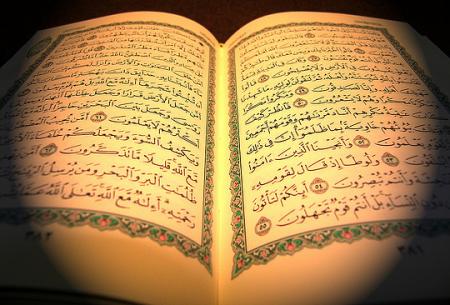
It's almost 2 years since I came to the USA I did never go to the Mosque, excuses (i dont know any mosque around the area where I live, I'm busy all the time, etc....) and finally I got the chance to pray in the Mosque, I was praying all the time during those 2 years but just at home or sometimes at work, but hamdolillah during this Ramadan and after an Iftar that I had w/ som friends that I met lately they showed me a Mosque where I can pray all the time inchallah..You can't imagine how happy I was when I first got into the Mosque,man!!! what a beautiful feeling!! you feel that you're really close of Allah and it's like you got a new soul deep inside..I like to drive fast all the time for reason or no reason but Sobhanallah whenever I get out from the Mosque I find myself driving so slow and I figure out that nothing deserve to rush for it in this Donia...ALLAHOMA LA 3AYCHA ILLA 3AYCHA L'AKHIRA.
Conclusion: Whenever you try to be away of your Dine and away of Allah the Shatan play w/ your mind, so stay as much as you can close of Allah Sobhanah..



07/09/2007 04:00 par likoli-nass
As the days have been soaring by
and life has been going on
one night I felt the shift in the air
summer is nearing the homestretch
I reflect on the coming morrow
and I feel the prickle of the hairs on my neck
as I further dwell on the realization
excitement and emotions flutter in my heart
that the days of the revelation are drawing close
if so granted by our Lord
we will rise way before the first light
to seal the path of nourishment
with desire to come close to our first love
to bow in praise and kneel for mercy
we dwell and ponder and marvel at the wonders
and heartily surrender the hours to supplication
Mercy will be within our reach
fervently we will plead for it
and as the crimson heavens appear
we will pray and dine
and absorb the blissful air
while we give our full devotion
then will come the most divine of all moments
sometime after the twilight
when the faithful will weep, beseech and draw near
giving into utter surrender
in ardent apprehension
coming back to the present
I smile and make a quick prayer
oh Great Lord please give me the chance
to live the glorious Ramadan

05/09/2007 01:27 par likoli-nass
Steady, reliable, and cradling her tenderly. Take a deep breath, and let it out real easy...you are The Slow Dancer
Your focus is love, not sex, and for your age, you have average experience. But you're a great, thoughtful guy, and your love life improves every year. There's also a powerful elimination process working in your favor: most Playboy types get stuck raising unwanted kids before you even begin settling down. The women left over will be hot and yours. Your ideal woman is someone intimate, intelligent, and very supportive.
While you're not exactly the life of the party, you do thrive in small groups of smart people. Your circle of friends is extra tight and it's HIGHLY likely they're just like you. You appreciate symmetry in relationships.